
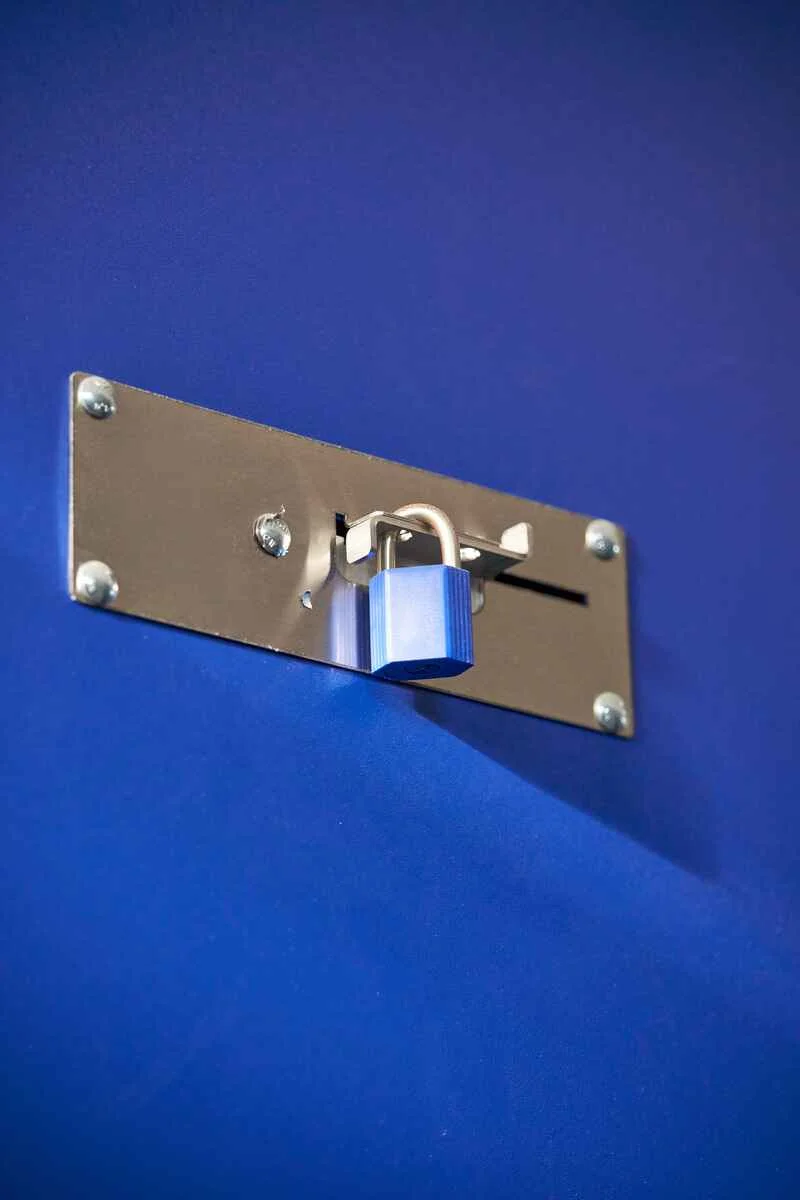
One of the most common ways a commercial door gets forced open has nothing to do with picking the lock — it is prying or slipping the latch, attacking the gap between the door and frame where the latch sits. A latch guard is an inexpensive piece of hardware that blocks this attack directly. For Norfolk County and Greater Boston businesses, a latch guard is one of the highest-value, lowest-cost security upgrades available, and here is how it works and why it matters so much.
Forced entry usually attacks the latch, not the lock cylinder, so protecting the latch addresses the real-world threat directly.
How forced entry actually happens
Most break-ins do not involve picking or sophisticated techniques; they involve force applied to the weakest point. On many commercial doors, that point is the latch — an intruder pries the door away from the frame to slip the latch, or attacks the exposed latch directly with a tool. The lock itself may be perfectly good, but if the latch can be reached and forced, the lock does not matter. Understanding that the latch is the target explains why protecting it is so effective and so worthwhile.
What a latch guard does
A latch guard is a metal plate that covers and protects the latch area, blocking the gap between the door and frame so the latch cannot be reached or pried. By denying access to the latch, it defeats the most common forced-entry method directly. It is a simple, sturdy piece of hardware that addresses a specific, well-known vulnerability. The Builders Hardware Manufacturers Association recognizes door reinforcement hardware as part of a secure opening.
Outswing versus inswing doors
Latch guards come in styles for different door configurations. An outswing door, common on commercial exits, exposes the latch and hinges to the outside and benefits from a latch guard designed to cover that exposed gap. Inswing doors have different needs. Choosing the right latch guard for how your door swings is important, and we assess each door to specify the correct guard, because the wrong style provides less protection and matching the hardware to the door is what makes the upgrade effective.
Pairing with other reinforcement
A latch guard works best alongside other door reinforcement. A reinforced strike plate, a solid door, and a quality deadbolt complement the latch guard, addressing the door as a complete system — the latch guard handles the prying attack while the strike and deadbolt resist kicking. The CISA security guidance encourages layered protection. We look at the whole opening, adding the latch guard as one effective layer among several rather than treating any single piece as the complete answer.
Low cost, high value
What makes a latch guard so worthwhile is the value: it is inexpensive hardware and quick to install, yet it defeats the single most common forced-entry method. Few security upgrades deliver that ratio of protection to cost. For a business protecting inventory, equipment, or records, a latch guard is a small investment against a real and common threat. We recommend latch guards as one of the first upgrades for a business serious about deterring break-ins on a sensible budget.
Where businesses need them most
Latch guards matter most on exterior commercial doors, especially back and side entrances that are out of sight and away from foot traffic — exactly where an intruder prefers to work unobserved. Rear doors of shops, warehouses, and offices are prime candidates. We help Norfolk County businesses identify the doors most exposed to forced entry and protect them, focusing the upgrade where it counters the highest risk rather than treating every door identically and spreading the budget thin.
Professional installation matters
Although a latch guard is simple hardware, proper installation matters — it must be correctly positioned and securely fastened to resist the very prying it is meant to stop. A poorly mounted guard can be defeated. We install latch guards correctly, with the right style for each door and secure fastening, so the protection holds up under a real attempt. Done right, a latch guard is a durable barrier that quietly does its job for years.
A smart security investment
For Boston-area businesses, a latch guard is one of the smartest security investments available: low cost, quick to install, and aimed squarely at the most common way doors are forced. Combined with other reinforcement, it makes a door genuinely hard to breach. We install latch guards and complete door-reinforcement packages across Norfolk County and Greater Boston, helping businesses harden their entrances against the real-world methods intruders actually use.
Business owners who protect their premises keep dependable help on call for every part of the operation. For related needs, we recommend water-damage restoration and structural drying.
Your Norfolk County Latch Guard Specialists
At Ozzy’s Locksmith, we install latch guards and door reinforcement across Norfolk County and Greater Boston — including Quincy, Brookline, Weymouth, Braintree, Randolph, and surrounding Massachusetts communities. Contact us to harden your doors, and see our latch guard installation services to stop forced entry.