
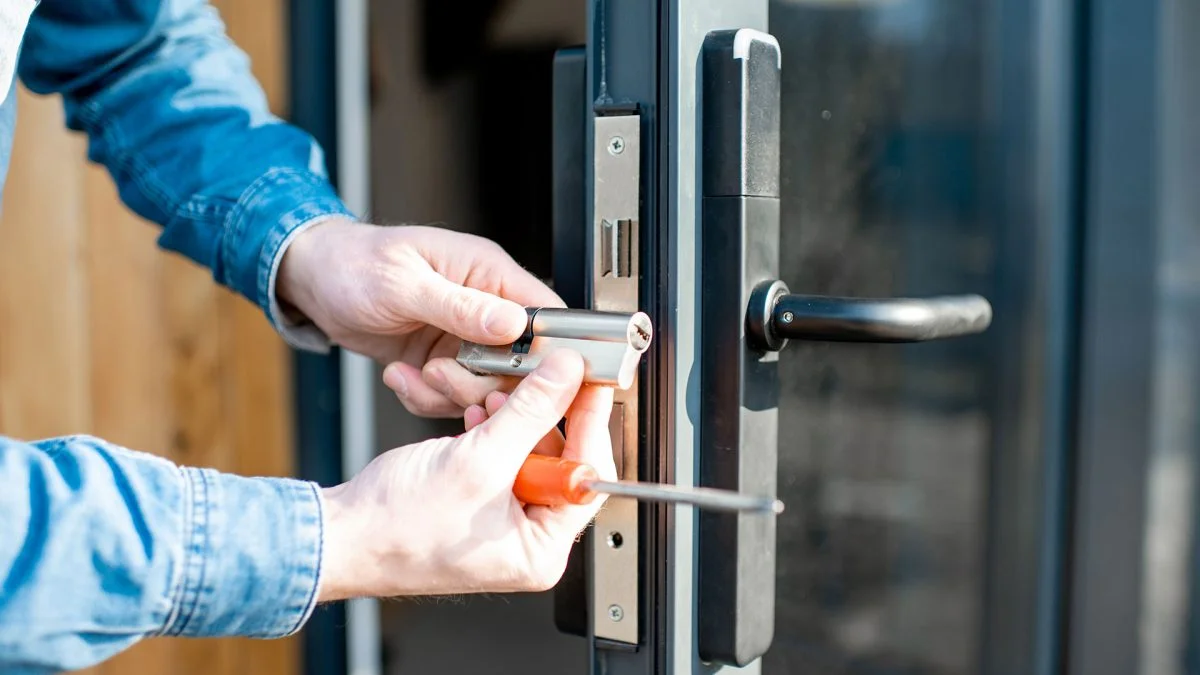
Smart locks promise a future without fumbling for keys — unlock with your phone, a code, or a fingerprint, grant access remotely, and see who comes and goes. They are increasingly popular, but homeowners rightly wonder whether keyless convenience comes at the cost of security. For Norfolk County and Greater Boston homeowners considering a smart lock, here is an honest look at what they offer, where they fall short, and how to choose one well so you get the convenience without a weak point.
A smart lock is only as good as both its electronics and the mechanical lock underneath, and judging one means looking at both halves honestly.
What a smart lock actually is
A smart lock combines a traditional deadbolt mechanism with electronics that allow keyless entry — via a keypad code, a smartphone, or a fingerprint — and often connectivity for remote control and access logs. Underneath the technology is still a physical lock that must be solid. A smart lock with weak mechanical hardware is no more secure against a kicked door than any other weak lock. Understanding that a smart lock is electronics layered over a real lock is key to evaluating one properly.
The convenience benefits
The appeal is real: no keys to lose, the ability to give a code to a guest or service person and revoke it later, remote locking if you forget, and a log of who entered when. For families, rentals, and busy households, this convenience and control is genuinely useful. Granting and removing access without cutting or collecting keys solves problems traditional locks cannot, which is why smart locks have become so popular despite their added cost and complexity.
The security questions
A smart lock adds an electronic attack surface to a physical one. Reputable smart locks use strong encryption, but cheap ones may have weak security, and any connected device warrants attention to updates and passwords. The CISA security guidance covers securing smart-home devices against digital attack. The honest picture is that a quality smart lock from a reputable maker, kept updated, is secure, while a bargain unit on a flimsy door is not. Quality matters far more than the smart label.
Batteries and reliability
Smart locks run on batteries, which means they can die — usually with warnings, but a neglected lock can leave you locked out or unsecured. Most have a backup, such as a physical key override or external power terminals, and choosing a model with a sensible backup is important. We steer homeowners toward smart locks with reliable fail-safes and remind them to heed low-battery warnings, so the convenience never turns into a lockout at the front door.
Keeping a mechanical backup
A point we stress is keeping a mechanical way in. Many smart locks include a traditional key cylinder as backup, which we generally recommend, because pure electronic locks leave you fully dependent on power and electronics. A mechanical override means a dead battery or a glitch is an inconvenience, not a crisis. We help homeowners choose smart locks that balance keyless convenience with a dependable physical fallback for genuine peace of mind.
Choosing a quality smart lock
Not all smart locks are equal. Look for a solid deadbolt grade, a reputable brand with a track record of security and updates, sensible battery backup, and features that match how you will actually use it. A well-graded lock body matters as much as the smart features. We help Boston-area homeowners cut through the marketing to choose a smart lock that is genuinely secure and reliable, not just feature-packed, and we install it correctly.
Smart locks as part of home security
A smart lock is one element of home security, not the whole picture. It works best alongside solid doors, reinforced strikes, good lighting, and sensible habits, complementing rather than replacing fundamental physical security. The CPSC safety guidance reflects a layered approach to home safety. We help homeowners fit a smart lock into a complete security setup rather than relying on it alone to protect the home.
Making the right call
Smart locks are worth it for many homeowners who value keyless convenience and access control, provided they choose a quality unit, keep a mechanical backup, and maintain the batteries and updates. They are not a magic upgrade and not right for everyone. We help Norfolk County and Greater Boston homeowners decide whether a smart lock fits their needs and, if so, select and install one that delivers the convenience without compromising security.
Homeowners who modernize their homes thoughtfully keep trusted help on hand for every project. For related needs, we recommend insurance-claim adjusting help.
Your Norfolk County Smart Lock Specialists
At Ozzy’s Locksmith, we install and advise on smart locks across Norfolk County and Greater Boston — including Quincy, Brookline, Weymouth, Braintree, Randolph, and surrounding Massachusetts communities. Contact us about smart locks, and see our residential locksmith services for the right choice.